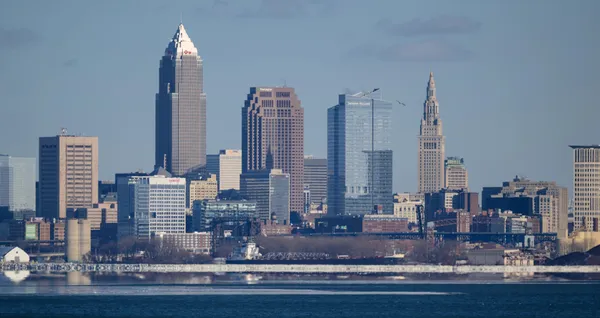
Cleveland’s downtown lakefront plan adds proposed 10,000-seat indoor-outdoor music venue, with timeline still evolving

A concert venue is now part of the city’s broader lakefront redevelopment concept
Cleveland’s long-running effort to remake its downtown lakefront has added a major new element: an indoor-outdoor music venue envisioned at about 10,000 seats. The venue is not a standalone project announcement with a construction schedule; instead, it is listed as a potential program component within a master-planning process that is still underway for roughly 50 acres of publicly controlled lakefront property.
The concept emerged publicly as the North Coast Waterfront Development Corporation selected DiGeronimo Development in December 2025 as master development partner for the downtown lakefront transformation. The development area includes surface parking north of Huntington Bank Field and land currently occupied by the stadium, which city officials have described as anticipated to be demolished in 2029.
What is known about location, planning steps and timing
City and waterfront development officials have outlined a sequence of next steps rather than a finalized site plan. A master planning consultant is expected to be selected in early 2026. A preliminary plan is expected to be shared publicly in summer 2026. Final uses—including whether and how a 10,000-seat music venue is pursued—are to be refined through that process.
The music venue appears among other proposed elements intended to reconnect downtown to Lake Erie, including mixed-income housing with retail, hotel and hospitality uses, publicly accessible food-and-beverage options, and expanded free public spaces and waterfront promenades.
How a 10,000-seat venue would fit Cleveland’s entertainment landscape
A roughly 10,000-seat indoor-outdoor venue would sit in a middle tier of capacity—larger than many clubs and small theaters but smaller than stadium shows—potentially changing how some touring acts route stops in Northeast Ohio. It is also being discussed at a time when downtown and near-downtown entertainment investment is accelerating, including a separate, city-approved immersive entertainment venue planned near Rocket Arena on East 4th Street and Huron Road, with completion projected for 2027.
Key questions raised as planning continues
Market impact: how a new mid-to-large venue might affect booking, ticket demand and scheduling across existing regional venues.
Public benefit: how frequently the space would be available for community use versus ticketed events, and how it would integrate with year-round lakefront access.
Governance and accountability: how community benefits commitments—such as workforce goals and participation targets for minority-, female- and small-business enterprises—would be defined and enforced through City Council and development agreements.
The lakefront redevelopment effort is positioned as a multi-year transformation, with the proposed music venue one of several components under consideration rather than a finalized project.
For now, the central verified fact is that Cleveland’s downtown lakefront master plan is being updated and advanced, and that an approximately 10,000-seat indoor-outdoor music venue is explicitly included among the uses being considered—pending the outcomes of planning, public review and future approvals.
Cuyahoga County judge to sentence Jeffrey and Lanaemarshe Grant in killing of 10-year-old Kaden Coleman

Downtown Cleveland traffic lights go dark Thursday morning, forcing four-way stops and complicating commutes
Two people killed in Maple Heights early-morning single-vehicle crash on Broadway Avenue, police investigate cause