Ohio Turnpike cameras capture another meteor over Northeast Ohio, renewing questions about sonic booms and debris
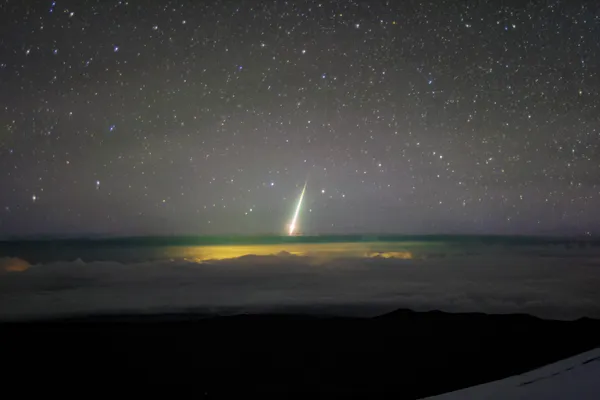
A brief, intense daylight spectacle recorded along a major corridor
A meteor was captured on Ohio Turnpike camera footage as it streaked across the sky, adding another confirmed instance in a recent run of widely observed fireballs over Ohio. The latest video shows a fast-moving, high-brightness object traversing the frame for only seconds before fading from view—typical of meteors that disintegrate rapidly as they encounter denser layers of the atmosphere.
In Ohio, the visibility of such events is often driven as much by circumstance as by astronomy. A fireball occurring in daylight or during high commuter traffic increases the likelihood of multiple independent recordings, especially from roadway and security camera networks that operate continuously.
What a “fireball” is—and why people sometimes hear a boom
Meteors are the visible paths produced when small space rocks enter Earth’s atmosphere at high speed and heat up from compression and friction. A small fraction become fireballs—exceptionally bright meteors visible over broad regions.
When a larger object fragments high in the atmosphere, it can generate shock waves that travel to the ground as a sonic boom. Reports of shaking windows or a delayed “boom” are consistent with an atmospheric breakup, where sound arrives after the light due to the much slower speed of sound. The delay can be long enough that some witnesses do not immediately connect the noise with what they saw overhead.
How scientists verify events and reconstruct paths
Verification typically relies on time-stamped video, dashcam footage, fixed surveillance recordings and eyewitness reports aggregated across a region. From multiple camera angles, analysts can triangulate a trajectory, estimate altitude and speed, and determine whether fragments may have survived to the ground as meteorites.
Ohio’s location and population density help produce robust datasets: metro areas, interstate corridors and the Great Lakes region collectively provide a dense grid of cameras and observers. That coverage can make it possible to distinguish between a meteor, space debris re-entry and other aerial phenomena.
Debris on the ground is possible—but not guaranteed
Most fireballs burn up completely, especially when the incoming object is relatively small or structurally weak. In cases where meteorites do fall, the debris field can be narrow and difficult to locate without a well-constrained trajectory and wind profile. Even then, recoveries are uncommon unless fragments land on accessible terrain and searches begin quickly.
- Light is seen almost instantly across large areas.
- Sound, if produced, can arrive minutes later and be localized.
- Surviving fragments depend on size, composition, entry angle and breakup altitude.
In many events, the most important evidence comes from synchronized video—small differences in timing and viewing angle can determine whether a meteorite fall is plausible.
What comes next
As additional footage is reviewed and time-stamps are cross-checked, analysts can refine whether this Ohio Turnpike-captured meteor was part of a broader multi-state sighting and whether any ground fall is likely. For now, the confirmed video adds to a growing recent record of bright meteor activity observed over Ohio and neighboring states, illustrating how modern camera networks are changing what can be documented—and reconstructed—after the sky briefly lights up.