Lake Erie shipwreck identified as 1867 Lorain-built bark Clough after years of underwater research
A 19th-century stone-hauling sailing vessel is added to the region’s documented wrecks
A shipwreck in Lake Erie has been positively identified as the Clough, a three-masted sailing vessel built in Lorain in 1867 and lost the following year. The identification follows years of underwater documentation and archival work by a Cleveland-based dive and research team working with a Great Lakes maritime museum.
The Clough was a stone-hauling vessel tied to northern Ohio’s quarrying economy during a period when sail-powered bulk transport helped supply growing Great Lakes ports and construction projects. The vessel was owned by Baxter Clough, a quarry owner from Amherst, Ohio, and was built to move stone as part of regional commerce.
What is known about the Clough
- Built in Lorain, Ohio, in 1867.
- Operated as a bark, a three-masted sailing vessel with a mixed sail plan common to larger cargo sailers of the era.
- Measured about 125 feet in length and roughly 26.5 feet in breadth.
- Sank on Sept. 15, 1868, while transporting stone.
How the identification was confirmed
The confirmation relied on repeated dives and systematic recording of the wreck site. Researchers produced a detailed site map and compared observable construction features with historical records of Lake Erie vessels built and lost in the late 1860s. This approach—pairing field measurements with documentary research—is a standard method in underwater archaeology when a wreck lacks a clearly readable nameboard or other immediate identifying marker.
Lake Erie’s cold freshwater can preserve wooden hull structure and fasteners for long periods, enabling investigators to match dimensions and design details to vessel histories. At the same time, shifting sediment and damage from storms and ice can obscure key components, making multiple site visits and careful mapping critical before reaching a positive identification.
Why this matters to Northeast Ohio
The Clough’s identification adds a Lorain-built vessel to the growing list of historically documented shipwrecks in Ohio waters. It also expands the public record of how quarrying, coastal shipbuilding, and port development were linked in the decades after the Civil War, when Great Lakes trade supported rapid industrial growth.
The ship’s short working life—about a year from launch to loss—underscores the risks faced by 19th-century lake shipping, even on routes that were central to regional commerce.
Public exhibit planned in Toledo
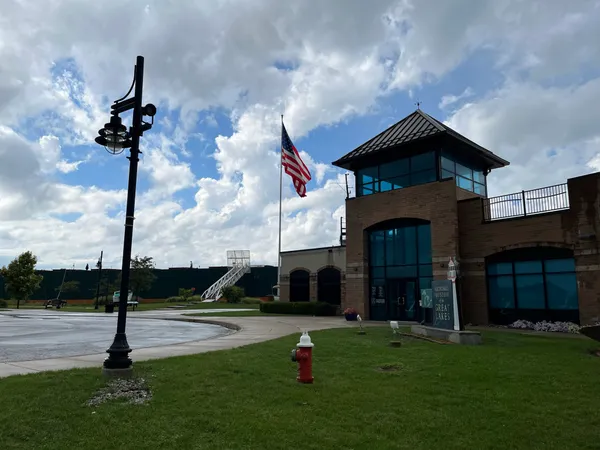
A temporary microexhibit devoted to the Clough and the process used to confirm its identity opened Feb. 18 and is scheduled to run through April 16 at the National Museum of the Great Lakes in Toledo. The display is expected to highlight the vessel’s background, the site documentation, and the broader effort to locate and identify shipwrecks across Lake Erie.
For Great Lakes historians and the public alike, the Clough’s identification provides a new, tangible reference point for a formative chapter of Ohio’s maritime and industrial past.