I-480 Eastbound Crash Near Clague Road Temporarily Blocks Lanes, Backing Up Traffic Beyond Stearns Road
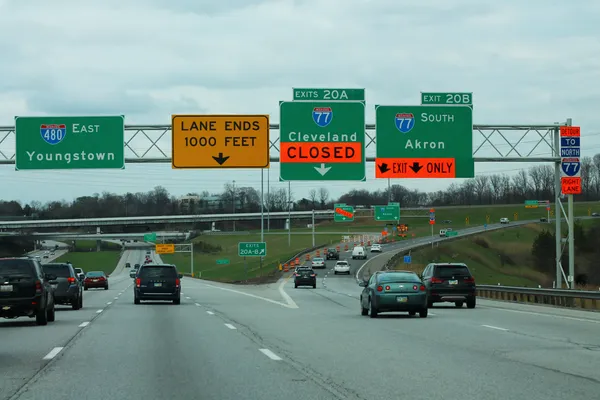
What happened and where traffic was affected
A crash in the eastbound lanes of Interstate 480 near the Clague Road area caused significant slowing and lane blockages during the morning commute, disrupting traffic through a key west-side corridor that connects multiple suburbs with Cleveland’s major interchange network.
Traffic impacts were concentrated on I-480 eastbound just past Clague Road, where multiple lanes were reported temporarily blocked. The slowdown extended well beyond nearby access points, with backups stretching past Stearns Road as drivers approached the affected area.
Lane blockages and timeline of the disruption
The crash led to the temporary blockage of the right three lanes of I-480 eastbound. The restriction created a bottleneck that slowed traffic to a crawl for a sustained period as first responders and road crews worked at the scene and motorists merged left to continue through the corridor.
Clearing operations and traffic recovery took place over the following hours. The scene was reported cleared after 9 a.m., allowing traffic to gradually return to typical morning flow patterns.
What remains unknown
Key details were not immediately available in the public information released during the incident response. Authorities had not confirmed the number of vehicles involved, the cause of the crash, or whether anyone was injured. Such information is often released later, after on-scene assessment and any necessary investigative steps are completed.
Why this stretch of I-480 can snarl quickly
I-480 is among Northeast Ohio’s most heavily traveled east-west routes, carrying commuters between western suburbs and central employment centers while also feeding traffic to nearby interstates and major arterials. When multiple lanes close—particularly during peak commuting hours—backup growth can be rapid because:
- high traffic volumes reduce available space for merging
- closely spaced interchanges increase turbulence from entering and exiting traffic
- drivers braking near a blockage can trigger stop-and-go waves far upstream
Driver guidance during similar incidents
When lane blockages develop on I-480, drivers can reduce risk and secondary crashes by slowing earlier than usual, increasing following distance, and avoiding last-second lane changes near the slowdown. Motorists approaching active scenes should also remain alert for stopped traffic over crests and curves, where visibility can be limited.
As crews clear a crash scene, travel times typically improve gradually rather than immediately, as congestion dissipates in waves.