Estimate cuts raise questions about Cleveland-Cliffs’ expected 2026 earnings rebound after a difficult 2025 performance
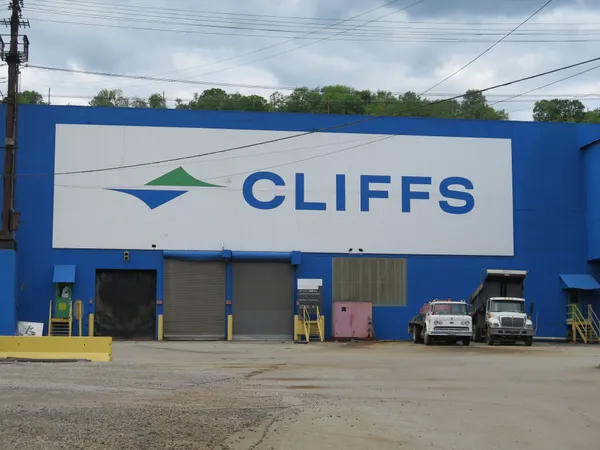
What changed in the outlook for Cleveland-based steelmaker Cleveland-Cliffs
Cleveland-Cliffs entered 2026 projecting a sharp improvement after a year marked by weak demand from its largest end market, the North American automotive sector. But in the weeks leading into key reporting periods, analyst earnings expectations have been reduced materially, raising questions about how quickly the company’s expected “reset” can show up in financial results.
The debate is unfolding against a backdrop of mixed signals: the company has described multiple headwinds from 2025 as easing, while Wall Street’s near-term revisions suggest continued caution about timing, pricing and volume.
2025 results show a steep drop in profitability, despite late-year progress
For full-year 2025, Cleveland-Cliffs reported revenue of $18.6 billion and adjusted EBITDA of $37 million, down from $773 million in 2024. The company posted a GAAP net loss of $1.4 billion for 2025. In the fourth quarter, revenue was $4.3 billion and adjusted EBITDA was a loss of $21 million, improving from an $81 million loss in the year-ago quarter.
Management attributed 2025’s weak performance primarily to subdued automotive production, an expiring slab supply contract that became unprofitable late in its term, and an “adverse dynamic” in Canada. The company said conditions improved as 2026 began, including what it described as a more constructive U.S. trade environment.
Why estimates were cut even as the company points to better conditions
Estimate reductions typically reflect changes to assumptions on realized steel prices, contract/customer mix, shipment volumes, input costs, and the pace at which cost actions flow through financial statements. For Cleveland-Cliffs, the company’s footprint optimization has been a central driver of the bullish earnings narrative, but it also signals underlying demand weakness in certain product lines and regions.
During 2025, the company decided to fully or partially idle six operations to respond to market conditions and streamline the footprint. These included idling major steelmaking assets at Dearborn Works in Michigan, idling operations in Conshohocken and Steelton in Pennsylvania and Riverdale, Illinois, and idling the Minorca mine while partially idling Hibbing Taconite in Minnesota to work down excess pellet inventory. The company has said these actions are intended to reduce costs with minimal expected impact to flat-rolled steel output, but they also highlight the gap between capacity and demand in parts of the portfolio.
- Automotive demand remains a key variable for Cliffs’ shipment volumes and pricing power.
- Steel price levels—and the spread between finished steel prices and raw material inputs—can quickly change earnings trajectories.
- Operational idlings can support costs, but they can also reduce absorption if utilization remains low.
Canada exposure and the Stelco acquisition add complexity
Cleveland-Cliffs completed its acquisition of Canadian steelmaker Stelco on Nov. 1, 2024, expanding its footprint in Ontario. The addition increased exposure to spot-market dynamics while also adding opportunities for procurement and overhead efficiencies. At the same time, the company has cited challenging market conditions in Canada as one of the factors that weighed on 2025 performance.
For investors and local stakeholders, the central question is whether the operational and market improvements described for 2026 can outpace the near-term caution reflected in reduced earnings expectations.
Cleveland-Cliffs’ next quarters are expected to be closely watched for evidence that cost reductions, contract roll-offs, and end-market stabilization are translating into sustained margin improvement—rather than a rebound that remains concentrated in projections.