Cleveland National Air Show underscores uncertainty as leaders debate closing Burke Lakefront Airport by 2029
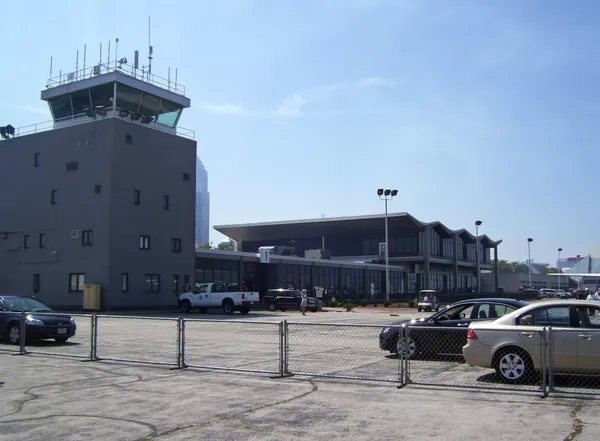
A signature event becomes a test case for the airport’s future
Cleveland’s annual National Air Show has become a focal point in the intensifying debate over whether Burke Lakefront Airport should close—an outcome city leaders have said could reshape the downtown waterfront but may also disrupt one of the region’s best-known summer traditions.
The air show, staged on Labor Day weekend at Burke, draws tens of thousands of spectators. City officials and event organizers have acknowledged that the show’s long-term future in Cleveland is uncertain if Burke is decommissioned, because the event’s logistics depend heavily on the airport’s runways, controlled airspace coordination, and on-site infrastructure.
What the city has proposed, and why timing matters
The Bibb administration has promoted closing Burke as part of a broader vision to redevelop roughly 450 acres of lakefront land for mixed uses, including public access and private development. City Council has opened a formal inquiry, scheduling public hearings to examine operational, financial, and legal implications of a shutdown.
A key constraint is the federal framework that governs publicly owned airports. City analyses have described two basic pathways: closing quickly, which could trigger repayment obligations tied to federal grants; or pursuing a longer runway to closure by limiting future federal funding and waiting out certain grant-assurance periods. In public discussions, the city has referenced a potential closure target of 2029.
Economic claims, competing projections
City-commissioned studies released in 2024 estimated Burke’s direct economic activity at about $76.6 million annually, concluding that much of that activity would likely remain in the region even if the airport closed. Separately, city staff have told Council the airport has run recurring operating deficits over many years and pointed to redevelopment scenarios with the potential to generate higher tax revenues than current airport operations.
Opponents of closure—including aviation groups and some business and pilot organizations—have argued Burke plays a wider role than leisure flying, including corporate travel, flight training, and specialized operations. They have also emphasized that federal approval would require the city to demonstrate closure serves the public interest and that regional airports can absorb displaced activity.
Why the air show is central to the debate
Supporters of keeping Burke open have repeatedly pointed to the air show as a civic and economic asset that could be difficult to replicate elsewhere in the city. Organizers have said the event would likely end if Burke closes, and city officials have said it remains unclear what an alternative venue would look like.
The airport’s future is now being shaped in parallel arenas—City Council oversight, administrative planning, and federal decision-making—leaving the air show to function as both an annual draw and a high-visibility reminder that Burke’s status is no longer settled.
- Burke Lakefront Airport: city-owned, lakefront general aviation facility near downtown
- Air show: held annually on Labor Day weekend at Burke, drawing large crowds
- Next steps: continued hearings and public engagement as the city advances closure and redevelopment planning
For residents, the question is no longer whether Burke can host major events today, but whether Cleveland is preparing for those events to survive a potential airport shutdown.