Cleveland Mayor Justin Bibb rebuts ‘next Cleveland’ framing, urging Seattle to study the city’s reinvention
A civic narrative dispute that spilled into a cross-country economic debate
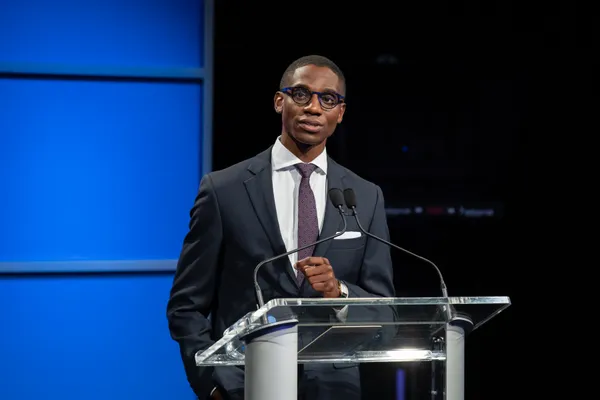
Cleveland Mayor Justin M. Bibb has publicly pushed back against a national-tech narrative that frames the city primarily as a warning label, arguing instead that Cleveland’s current trajectory offers lessons for other U.S. cities navigating economic change.
The exchange began after a guest column aimed at Seattle’s leaders and tech community used Cleveland’s mid-20th-century peak and subsequent decades of population loss and industrial decline as a cautionary comparison. Bibb responded in a social-media post, writing that the more relevant lesson is Cleveland’s capacity to rebuild—and suggesting Seattle should study Cleveland as “a case study of what’s possible” when longstanding challenges are confronted with urgency.
What Bibb highlighted: anchors, investment, and a bid to redefine the city’s brand
In his response, Bibb emphasized the role of large institutional anchors and sector strengths he says are driving Cleveland’s revival—particularly healthcare, research, and adjacent technology activity connected to the Cleveland Clinic and Case Western Reserve University. He also pointed to major capital programs and development initiatives underway in the region.
Hopkins International Airport is moving through a large-scale modernization plan that has been described publicly as a $1.6 billion program, with early work focused on passenger flow, terminal access, and supporting infrastructure.
Sherwin-Williams has been completing a major downtown headquarters project designed for phased occupancy, with public project materials describing a roughly 1 million-square-foot campus and an expected relocation of more than 3,000 employees as move-ins progress.
Bibb’s central argument is that Cleveland’s widely repeated “decline” storyline can obscure the policy choices and investments now reshaping the city—and that a city’s reputation can lag behind its on-the-ground economic direction.
Where the column’s author agreed—and where the disagreement remained
The column’s author, a longtime Seattle tech veteran and investor, welcomed Bibb’s engagement while drawing a line between Cleveland’s present and its historic arc. He framed his original warning as a comparison between Seattle today and Cleveland at its earlier apex, arguing that prosperity can be fragile if civic and state leadership fails to adapt to structural change.
In a follow-up conversation involving both men, Bibb acknowledged Cleveland’s past challenges, including the slow pivot during deindustrialization, while maintaining that Cleveland is now positioning itself as a model for industrial renewal and diversification. The author reiterated that his primary aim was to spur planning in Seattle amid rapid shifts in technology and the economy, including the rise of artificial intelligence.
The public back-and-forth underscores a broader question confronting many U.S. metros: how to use a city’s history without becoming trapped by it—while building a credible strategy for the next economic cycle.
What comes next
Bibb invited the column’s author to visit Cleveland to see redevelopment activity firsthand. The exchange has evolved from a dispute over framing into a broader, unusually direct dialogue between city leadership and a prominent voice in another region’s innovation economy—centered on how cities respond when their dominant industries change.