Cleveland Clinic Construction Crew’s Daily Waves Lift 4-Year-Old Waiting for a Heart Transplant
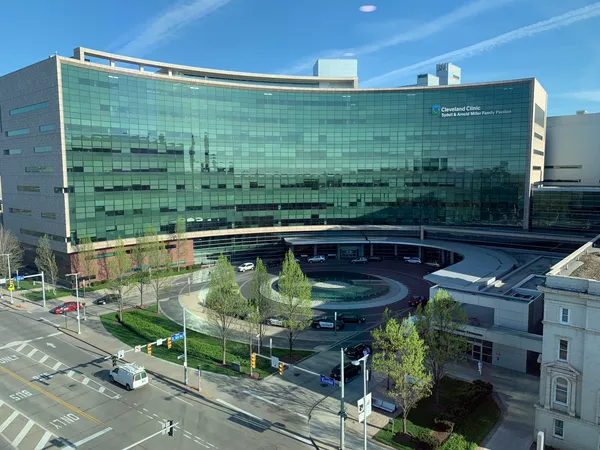
A daily ritual across a construction site
A group of construction workers building Cleveland Clinic’s new Neurological Institute has developed a routine that a hospitalized child and her family have come to anticipate each afternoon: at about 3 p.m., workers pause to wave from across the campus toward a fourth-floor window where 4-year-old Brinley Wyczalek has been staying while awaiting a heart transplant.
The exchange is simple and repetitive—waves and hand-formed heart shapes returned from the child’s room—yet it has become a reliable marker of time during a prolonged hospital stay that her family says has stretched beyond 100 days.
How the connection began
The interaction started in January, when Brinley noticed workers on the neighboring site. Her father used a light to signal across the gap, and the workers responded. What began as a brief acknowledgment turned into a daily practice, with the family making signs to communicate back and forth.
For families in long inpatient stays, routines can become central to maintaining a sense of normalcy. In this case, a construction schedule—normally distant from patient life—created a predictable point of contact outside the hospital room.
The medical context: why waiting can be long
Brinley’s family says she was diagnosed at age 2 with dilated cardiomyopathy and heart failure after a routine X-ray, without earlier symptoms. Dilated cardiomyopathy in children can follow viral illness, and severe cases may progress to the point where transplant is considered.
Time on a transplant waiting list varies widely because donor hearts are allocated based on medical urgency, compatibility and other clinical considerations. Pediatric programs note that waits can range from weeks for the most critically ill children to many months, and in some cases longer, depending on circumstances.
A major project rising next door
The construction site visible from Brinley’s room is part of Cleveland Clinic’s Neurological Institute building project on the main campus, a development the institution has described as a roughly 1-million-square-foot facility designed to consolidate neurological inpatient and outpatient care, expand intensive care capacity, add operating rooms and create additional space for imaging and research.
Cleveland Clinic has said the project reached a major milestone in early 2025 with the placement of a final steel beam and that the building is expected to open in 2027.
What the family is holding onto
While waiting, Brinley’s parents say the family is focusing on small, concrete goals and moments of connection. Brinley has talked about places she wants to visit after she is able to leave the hospital, including Cedar Point, a water park and a museum.
In the absence of a set timetable for transplant, families often measure progress in days and routines—an afternoon wave included.
Key facts at a glance
- Brinley Wyczalek is 4 and has been waiting more than 100 days for a heart transplant, her family says.
- Construction workers on Cleveland Clinic’s new Neurological Institute project wave daily at about 3 p.m.
- The family says Brinley was diagnosed at age 2 with dilated cardiomyopathy and heart failure, believed to be triggered by a virus.
- Cleveland Clinic has described the Neurological Institute building as a major campus expansion expected to open in 2027.