City Club forum with Center for Christian Virtue president Aaron Baer draws protests and renewed speech debate
Forum proceeds amid organized opposition
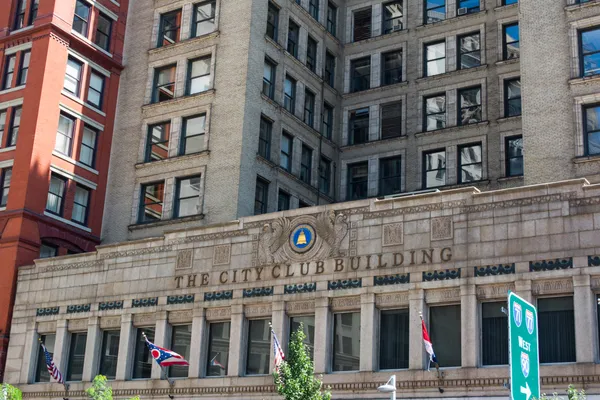
The City Club of Cleveland hosted a noon forum on January 16, 2026 featuring Aaron Baer, president of the Center for Christian Virtue (CCV), a Columbus-based conservative advocacy organization that has grown in influence at the Ohio Statehouse during the past decade.
The appearance went forward after weeks of public pushback from LGBTQ+ leaders and allied organizations who urged the City Club to cancel or significantly restructure the program. The coalition circulated an open letter calling for changes that included adding an LGBTQ+ countervoice or expert, appointing an external moderator trained in civil rights or constitutional issues, and clarifying that the City Club does not endorse discriminatory speech. City Club leadership publicly rejected calls to cancel the event, citing the institution’s mission to convene civic dialogue, including with controversial speakers.
Protests outside, tense reactions inside
Demonstrators gathered outside the City Club’s entrance during the forum, carrying signs supporting transgender youth and LGBTQ+ rights. Inside the venue, attendees also signaled dissent during portions of Baer’s remarks, while the program continued with a moderated discussion and audience question-and-answer segment.
A protest action at the City Club’s front windows involved the use of fake blood, and police issued a vandalism citation to one demonstrator, according to reports from the scene.
What Baer said and what critics objected to
During the forum, Baer emphasized a policy agenda framed around the role of faith in public life and government decision-making. Critics focused on language used during the discussion about sex, gender identity, youth medical care and family structure, arguing that it stigmatized transgender people and LGBTQ+ families.
The episode sharpened a central dispute over how civic institutions should handle speakers tied to polarizing policy campaigns: whether providing a high-profile platform advances public understanding through open questioning, or instead confers legitimacy on claims opponents consider discriminatory or harmful.
Why CCV became a flashpoint in Ohio politics
CCV’s political prominence has coincided with major legislative fights, including Ohio’s House Bill 68. The measure became law in 2024 after the General Assembly overrode the governor’s veto. The law restricts gender-transition-related medical care for minors and also bars transgender girls and women from participating on girls’ and women’s sports teams in K–12 and college settings. Supporters describe the law as protective of children and fairness in sports; opponents describe it as government intrusion into medical decisions and a direct threat to transgender youth.
Questions for civic forums going forward
The City Club’s decision to host Baer, and the intensity of the response, underscores ongoing pressure on public-facing institutions to define the boundaries between open debate and harm prevention. The immediate aftermath left unresolved questions about programming standards, how moderators challenge contested claims in real time, and whether future forums on the same policy disputes will include additional perspectives and subject-matter experts.
- Event date: January 16, 2026
- Setting: The City Club of Cleveland forum with moderated discussion and audience Q&A
- Central tension: free-speech mission versus concerns about platforming discriminatory rhetoric
The controversy reflects a broader national debate over how public institutions weigh viewpoint diversity, safety, and factual accountability in highly contested cultural-policy issues.